If you have been watching North Texas expand and wondering where the next wave of opportunity is building, Sherman deserves a close look. This is not just a city with a few new subdivisions or one major employer making headlines. Sherman is growing through a powerful mix of job creation, infrastructure upgrades, and a deep housing pipeline, which matters whether you plan to buy, sell, relocate, or invest. Let’s dive in.
Sherman has real growth momentum
Sherman is growing fast by both city and regional standards. The city’s population was estimated at 50,229 in July 2024, up 15.0% from the 2020 base, while Grayson County reached 150,532, up 11.0% over the same period, according to U.S. Census QuickFacts.
That growth is not happening by accident. A HUD housing market report for Sherman-Denison estimated average annual population growth of 2.6% since 2020 and noted that all of that growth came from net in-migration. In simple terms, more people are choosing to move into the area than leave it.
For many buyers, that matters because migration tends to follow affordability, access, and jobs. HUD also found that much of the inflow was connected to nearby Collin and Denton counties, where home prices were significantly higher. That makes Sherman especially relevant if you want North Texas access with a different price point than some of the more built-out suburbs closer to Dallas.
Sherman’s location supports long-term demand
Location is one of Sherman’s biggest strengths. The city sits at the intersection of US 75 and US 82, giving it strong regional access for commuters, businesses, and freight movement.
According to the City of Sherman’s 2024 Annual Comprehensive Financial Report, the city also benefits from rail access through the BNSF industrial spur and private air service through North Texas Regional Airport and Sherman Municipal Airport. The city describes Sherman as the largest city in the tri-county area and a regional hub for business, retail, government, and professional services.
That kind of connectivity supports more than convenience. It helps explain why major employers are investing here and why housing demand is expanding alongside commercial development.
Semiconductor investment is changing Sherman
One of the clearest reasons Sherman stands out is the scale of its semiconductor-led investment cycle. Texas Instruments announced that production began at its newest Sherman facility on December 17, 2025.
TI says the Sherman mega-site can support up to four connected wafer fabs and as many as 3,000 direct jobs. The company also said the broader semiconductor investment plan exceeds $60 billion across Texas and Utah, showing that Sherman is tied to a much larger manufacturing strategy, not a short-term experiment.
Sherman is also benefiting from another major project. In 2022, GlobalWafers announced plans for a 300-mm silicon wafer factory in Sherman, which the company described as the first of its kind in the United States in more than 20 years. The project could support as many as 1,500 jobs.
For buyers and investors, this is important because major advanced manufacturing projects often create ripple effects. Direct jobs can lead to more demand for housing, retail, services, construction, and transportation over time.
Sherman’s economy is broader than one industry
Even with the semiconductor story grabbing attention, Sherman is not relying on a single employer. The Sherman Economic Development Corporation major employers list includes Tyson, Sherman ISD, Carrus Hospital, the City of Sherman, Texas Instruments, Emerson, Coherent, GlobalWafers, GlobiTech, Sunny Delight, and others.
The city’s 2024 financial report also points to an industrial base that includes electronics, food products, PVC materials, lumber, railroad components, precision valves, and electricity. That range matters because diverse employer bases can help support a more resilient market over time.
The same city report states that Sherman’s property-tax base grew about 18% year over year, with about half of taxable value in commercial and industrial property. That kind of tax-base expansion helps show why Sherman is getting more attention from both residents and investors.
Infrastructure is expanding with growth
Growth is easier to sustain when roads, utilities, and public systems expand with it. Sherman has several major projects underway that support the city’s next phase.
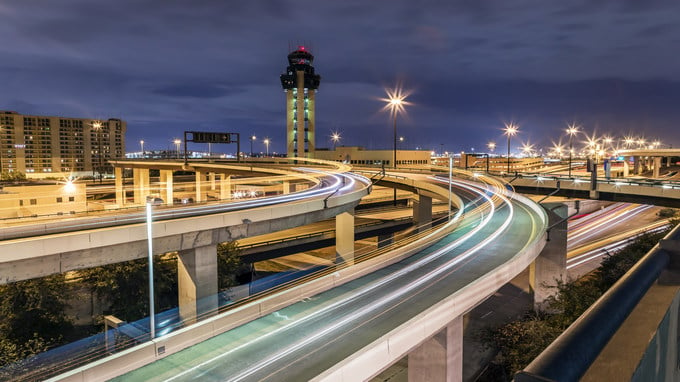
TxDOT’s US 75 Project is focused on long-term transportation and operational improvements on US 75 and US 82 in Sherman and Denison. TxDOT says the work is intended to improve safety, congestion, traffic operations, drainage, and roadway deficiencies, with reconstruction that can include additional main lanes, frontage roads, U-turns, and interchange improvements.
The city’s 2024 annual report adds useful timing context. It says TxDOT had substantially completed the first phase of the US 75 expansion from FM 1417 to Texoma Parkway, continued work from South Loy Lake to North Loy Lake, and began a new phase from Texoma Parkway to US 82 with estimated completion in fall 2027.
There is also a longer-range regional transportation story to watch. TxDOT’s Grayson County Tollway Study is evaluating a possible 37-mile extension of the Dallas North Tollway toward US 75 near Denison. TxDOT says the study could improve access to Sherman, Denison, and Lake Texoma while strengthening connections to the Dallas-Fort Worth metro area.
Utilities and policy tools support expansion
Roads are only part of the picture. Sherman’s city report says the city has an abundant water supply through ground wells and Lake Texoma, which is a major practical advantage as development scales.
The same report says Sherman’s FY2025 budget includes $48.7 million in the General Improvement Fund and $84.4 million in the Utility Improvement Fund for streets, industrial wastewater treatment, utility lines, and wastewater expansion. Those numbers suggest the city is actively investing in the systems needed to support residential and industrial growth.
Sherman also offers a range of development tools, including TIRZ, PID, MUD, commercial tax abatements, residential tax abatements, and LIHTC support, as outlined through the city’s development incentives resources. For consumers, the takeaway is simple: local policy is supporting managed growth rather than leaving expansion entirely to chance.
The housing pipeline is unusually large
One reason Sherman remains so interesting is that the housing response is still unfolding. A 2024 City of Sherman housing study shows how sharply permitting accelerated after 2020.
From 2018 to 2020, the city averaged about 450 permits annually. That rose to 740 in 2021, 1,125 in 2022, and 1,550 in 2023.
The same study found:
- 3,745 units under construction
- 8,143 units under engineering review
- 15,976 units in planning
- 27,864 total units in the pipeline
A notable detail is that 57% of the pipeline is designated multifamily. That points to a market that is trying to meet demand through multiple housing types rather than relying only on detached homes.
What new development means for the market
Sherman’s city report lists nine active planned developments and highlights several large communities. Examples include Bel-Air Village, with nearly 300 Phase 1 permits already issued and plans for 3,000 multifamily units, 1,000 single-family homes, and commercial space; Shepherd’s Place, with 1,820 multifamily and 1,359 single-family units; and The Village, with 1,500 multifamily and 1,500 single-family homes.
That is a meaningful amount of future supply. It creates more options, but it also means you should think beyond broad headlines and focus on timing, product type, and location within the city.
The 2024 housing study says Sherman’s current housing supply is balanced overall. It also found that units already under construction could satisfy demand for the next eight to nine years, while the broader pipeline could meet demand for 14 to 15 years. At the same time, the study notes that lower-AMI segments are under-supplied, which highlights that not every part of the market is equally served.
Why buyers are paying attention
If you are buying in Sherman, the opportunity is not just about getting in early. It is about matching your goals to a city that is still developing in real time.
Job creation, road improvements, and large-scale housing delivery can create more choices over the next several years. But they can also produce big differences from one area or community to another, especially if your priorities include commute patterns, new construction timelines, resale competition, or investment potential.
Sherman also offers a useful affordability baseline for comparison. According to Census QuickFacts, the city’s median owner-occupied home value was $243,500, median gross rent was $1,324, and median household income was $58,859. For many North Texas movers, those numbers help explain why Sherman is now part of the broader relocation conversation.
What sellers should keep in mind
If you own property in Sherman, growth can be a positive tailwind, especially near major transportation corridors and newer development areas. Ongoing employer expansion and infrastructure upgrades can continue to support buyer interest.
At the same time, sellers should stay realistic about competition. Because so much housing is planned or under construction, some segments may face pressure from brand-new inventory, builder incentives, or changing buyer preferences.
That means strategy matters. Pricing, presentation, and market positioning become even more important when buyers have multiple options.
Why Sherman matters for investors
For investors, Sherman’s story is compelling because it is built on more than momentum alone. Large employers, long-range transportation planning, city utility investment, and a substantial housing pipeline all point to a market with active public and private capital flowing into it.
The strongest themes appear to be workforce housing, multifamily, and mixed-use opportunities near employment centers and transportation corridors. As always, the best opportunity depends on your timeline, risk tolerance, and property type, but Sherman clearly stands out as a market worth watching closely.
The big takeaway on Sherman
Sherman is a North Texas growth hotspot because multiple forces are moving in the same direction at once. Population growth, in-migration, major manufacturing investment, highway improvements, utility expansion, and a large development pipeline are reinforcing one another.
That does not mean every property or project will perform the same way. It does mean Sherman is evolving quickly, and smart decisions will come from understanding where growth is happening, what type of supply is coming, and how your goals fit into that picture.
If you are exploring a move, a purchase, or an investment strategy in North Texas, working with an advisor who understands both regional growth patterns and on-the-ground market shifts can help you make a more confident decision. When you are ready for tailored guidance, connect with Minouche Martins to request a personalized consultation.
FAQs
Why is Sherman, Texas growing so fast?
- Sherman is growing because of strong net in-migration, major semiconductor investment from Texas Instruments and GlobalWafers, expanding transportation infrastructure, and a large pipeline of planned housing.
How much has Sherman, Texas grown recently?
- The City of Sherman’s population was estimated at 50,229 in July 2024, which is 15.0% above its 2020 base, according to U.S. Census QuickFacts.
What major companies are investing in Sherman, Texas?
- Texas Instruments and GlobalWafers are two of the biggest headline investors, while the broader employer base also includes companies and institutions such as Tyson, Emerson, Coherent, Carrus Hospital, and Sherman ISD.
Is Sherman, Texas affordable compared with other North Texas areas?
- Sherman may offer a different affordability profile than some faster-growing counties closer to Dallas. Census QuickFacts lists a median owner-occupied home value of $243,500, and HUD notes that nearby Collin and Denton counties had higher home prices that helped drive in-migration toward Sherman-Denison.
What should homebuyers know about Sherman, Texas housing?
- Buyers should know that Sherman has a large housing pipeline, including single-family and multifamily development, so timing, location, commute needs, and competition from new construction all matter.
Is Sherman, Texas a market to watch for real estate investment?
- Sherman stands out as a market to watch because job growth, infrastructure upgrades, city investment, and ongoing residential development are all occurring at the same time.