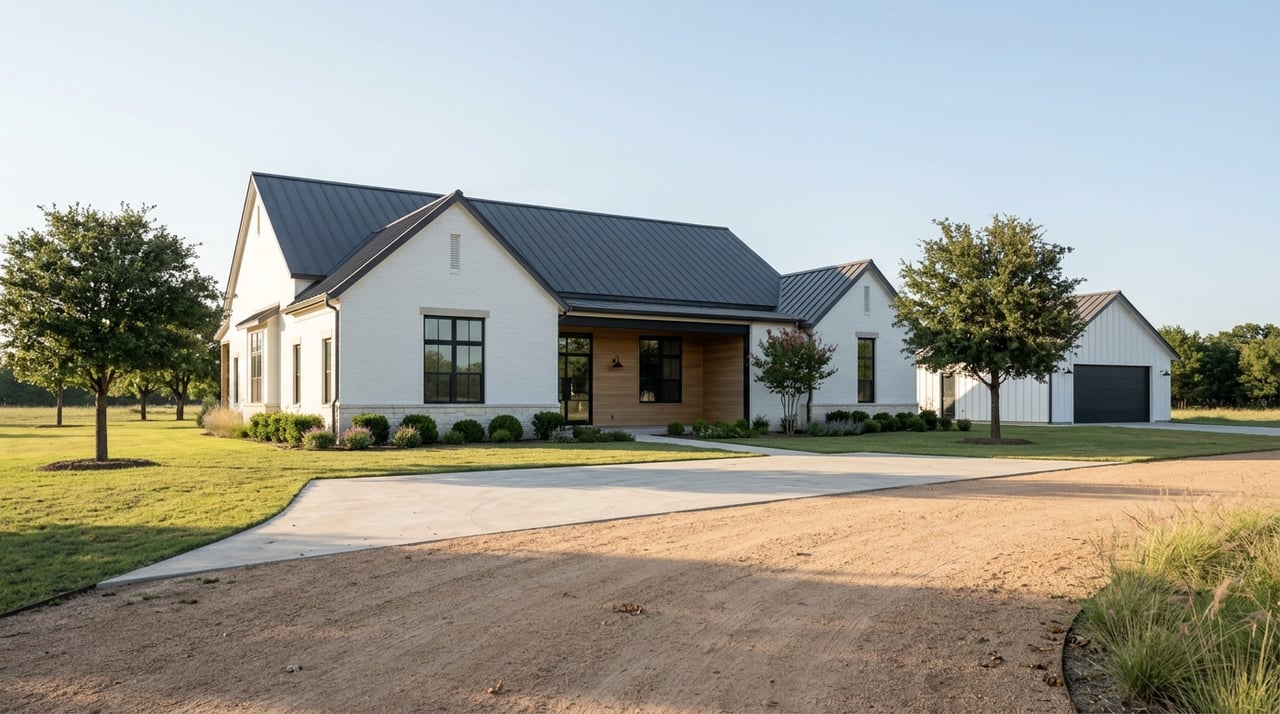
Dreaming about more space, wider skies, and a home that feels a little more tucked away from the pace of suburbia? Owning a home on land near Argyle can offer that balance many North Texas buyers want: a rural feel with access to the north DFW corridor. If you are considering acreage in or around 76226, it helps to understand not just the lifestyle, but also the rules, upkeep, and tradeoffs that come with it. Let’s dive in.
Why land near Argyle feels different
Argyle has built its identity around preserving small-town character and natural beauty while staying connected to major routes like US-377, FM-407, and I-35W. That is a big reason homes on land near Argyle appeal to buyers who want breathing room without feeling isolated from the rest of DFW.
In daily life, that can mean quieter surroundings, more open views, and a less dense setting than a typical subdivision. The town’s vision also highlights open spaces, watersheds, creeks, tree canopy, wildlife, and natural beauty, which helps explain why many acreage properties feel more relaxed and scenic.
At the same time, it is important to know that the area is still shaped by long-range planning. Argyle’s Comprehensive Plan covers the incorporated area and its ETJ, so land that feels country-like today may still sit within an active growth environment.
What acreage homes often look like
If you picture a home on land near Argyle, you are often thinking about estate-lot living rather than fully unregulated rural property. In Argyle’s SF-1 estate district, detached single-family homes must sit on at least one acre and have at least 150 feet of lot width.
That zoning framework helps create the spacious feel buyers notice right away. It also supports a more rural streetscape, since the ordinance allows rural street sections that may include open drainage ditches and no sidewalks.
The homes themselves are still governed by standards. The SF-1 ordinance sets a 1,600-square-foot minimum dwelling size, limits lot coverage, and requires paved driveway parking.
That means more land does not automatically mean unlimited flexibility. Open storage is generally prohibited except for screened personal-use materials, and recreational vehicles, travel trailers, and motor homes cannot be used as on-site dwellings.
The lifestyle: space, privacy, and flexibility
For many buyers, the biggest draw is simple: you get room to spread out. A property on land near Argyle can offer more separation from neighbors, more outdoor living space, and more options for how you use your property day to day.
That extra space often changes how a home feels. Instead of focusing only on the square footage inside the house, you also start thinking about tree cover, fence lines, driveway approach, drainage patterns, and how the land functions across the seasons.
This type of ownership can be a great fit if you like the idea of a slower visual pace and a more hands-on relationship with your property. It is less about subdivision convenience and more about having space that you actively manage and enjoy.
Utilities can vary by property
One of the biggest surprises for buyers moving from a traditional neighborhood is how much utilities can vary from one acreage property to another. In Argyle’s SF-1 areas, water service must come from or be provided for through Argyle Water Supply Corporation.
Other services like gas, electric, internet, and trash can differ based on the exact location. That makes utility planning more parcel-specific than it is in many master-planned communities.
Before you buy, it is wise to confirm exactly what serves the property today and what costs or limitations may come with those services. This is one of the practical details that can affect both your monthly budget and your day-to-day convenience.
Septic systems are a major ownership topic
If a property uses a septic system, that is not a small detail. Denton County describes an on-site sewage facility, or OSSF, as a private wastewater treatment system owned by the property owner.
In unincorporated areas, Denton County handles permits and inspections. Inside Argyle town limits, the Town of Argyle Public Works Department handles OSSF permitting and compliance.
For you as a buyer, that means septic due diligence matters. You will want to know what system is in place, where the drainfield is located, and what kind of maintenance history exists.
Denton County advises that septic tanks should usually be cleaned every two to three years. It also notes that owners should minimize grease and garbage grinder use and should not build driveways or structures over the treatment field.
Land upkeep is part of the deal
Acreage ownership near Argyle is not just lawn care on a bigger lot. In many cases, the property becomes an ongoing land-management project.
Texas A&M’s small-acreage guidance notes that smaller tracts come with their own management challenges. Recommendations that work on large ranches do not always scale neatly to a smaller residential acreage property.
Brush management can also be an ongoing process. Texas A&M Forest Service notes that brush control is often phased over time, and mechanical control can become expensive.
That matters in this area because drainage, tree cover, overgrowth, and fence lines are not side issues. They are part of normal ownership. If you love land, that can be rewarding. If you prefer a low-maintenance routine, it is something to think through carefully.
Animals and hobby use may be possible, but regulated
Many buyers ask whether owning land near Argyle means they can keep horses or other livestock. The answer depends on the property and the applicable rules.
In Argyle’s SF-1 district, private animal lots and stables are allowed only by specific use permit. The ordinance ties that use to at least 1.5 acres of grazing land and about one animal unit per acre.
There are also distance requirements for stables, corrals, manure, feed, and bedding. So while animal use may be possible, it is not automatic just because a property has acreage.
If this is part of your plan, it is important to verify what is allowed before making an offer. That step can save you from buying a property that does not match your intended use.
Jurisdiction matters more than many buyers expect
Not every property near Argyle falls under the same rules. A parcel may be inside the Town of Argyle, in the ETJ, or in unincorporated Denton County.
That distinction matters because permits, subdivision requirements, and development rules can change based on jurisdiction. Argyle’s FAQ notes that buyers and residents can verify this through the town map or Denton CAD.
The town also notes that its subdivision ordinance applies within the town and ETJ. In unincorporated Denton County, a development permit may be required, and septic work may need a separate county permit.
Argyle’s FAQ also notes that preliminary platting can be required for unplatted tracts larger than ten acres or for development involving streets, drainage ways, or utilities. If you are buying land with future plans in mind, this is a key area to investigate early.
Property taxes deserve a closer look
Property taxes are another major consideration when you buy land near Argyle. Texas does not have a state property tax, so local taxing units set rates.
Some land may qualify for agricultural or open-space appraisal based on productivity value instead of market value. However, eligibility depends on use, history, and local requirements.
The research also notes that incorporated-city land can face additional eligibility hurdles. In other words, you should not assume a tax benefit applies just because a property has acreage.
How acreage compares with subdivision living
The appeal of acreage is easy to understand. You may gain more privacy, more room for hobbies, and a daily routine that feels less crowded while still staying connected to North DFW.
The tradeoff is responsibility. More land usually means more maintenance, more variability in utilities, more drainage concerns, and more due diligence around septic systems, permits, and property use.
That is why homes on land near Argyle are best understood as estate-lot or small-ranch living. You are not just buying a house. You are taking on a property that asks you to think like a land steward.
Questions to ask before making an offer
If you are seriously considering acreage near Argyle, keep these questions front and center:
- Is the property inside Argyle town limits, in the ETJ, or in unincorporated Denton County?
- What wastewater system serves the home, and where is the drainfield located?
- What utilities are available, and are any services limited by location?
- Are horses or other animals allowed, or would a specific use permit be required?
- Is the tract platted, and are there development or permitting issues to review?
- Does the land qualify, or could it qualify, for open-space or agricultural appraisal based on actual use and history?
The right acreage property can be a wonderful fit, but it pays to go in with clear expectations. When you understand the land, the systems, and the local rules, you can buy with much more confidence.
If you are exploring homes on land near Argyle and want high-touch guidance tailored to your goals, Minouche Martins can help you evaluate the lifestyle, the property details, and the practical questions that matter most.
FAQs
What is acreage living near Argyle really like?
- Acreage living near Argyle often means more space, a quieter setting, and a rural feel within reach of North DFW, but it also comes with more hands-on property maintenance and planning.
What zoning rules apply to estate lots in Argyle?
- In Argyle’s SF-1 estate district, detached single-family homes must sit on at least one acre with at least 150 feet of lot width, and the district includes additional rules for dwelling size, parking, and property use.
What should buyers know about septic systems near Argyle?
- Buyers should confirm the type, location, and condition of any septic system, because maintenance, permitting, and compliance can affect both ownership costs and how the property can be used.
Can you keep horses or livestock on land near Argyle?
- In Argyle’s SF-1 district, private animal lots and stables may be allowed only by specific use permit, with acreage and spacing requirements that must be reviewed case by case.
Why does jurisdiction matter for land near Argyle?
- A property may be inside town limits, in the ETJ, or in unincorporated Denton County, and that can affect permitting, platting, septic oversight, and development rules.
Do acreage properties near Argyle automatically get tax advantages?
- No, open-space or agricultural appraisal depends on use, history, and local eligibility standards, so buyers should verify qualification rather than assume it applies.