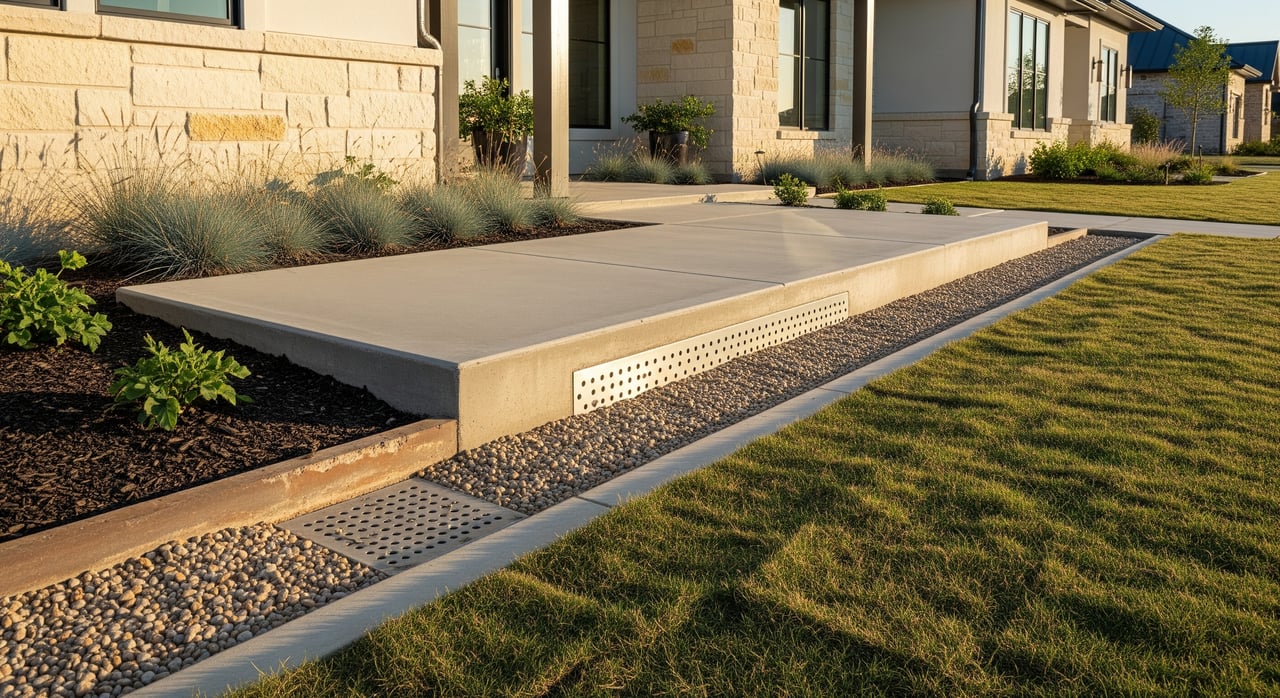
If you live or plan to build in Little Elm, you have likely heard about our clay soils. In wet months the ground swells, then during hot Texas summers it shrinks. That movement can shift a foundation and stress finishes if the site and structure are not designed correctly. In this guide, you will learn how to choose smarter foundations, set proper grading and drainage, and navigate local rules so you protect your investment. Let’s dive in.
Why clay soils matter in Little Elm
Clay soils change volume with moisture. In drought they contract and crack, then after rain they expand. That uneven movement around a home can cause slab heave, settlement, and wall or brick cracks if moisture is not managed and the foundation is not engineered for it. You can learn more about shrink–swell behavior and drainage risks from this overview of expansive soils and lot drainage in North Texas neighborhoods (expansive soils guide).
Start with site investigation
Map your lot’s soils
Before you buy or design, review the USDA’s soil maps for your exact area. The Web Soil Survey shows likely soil series, slopes, and drainage classes that hint at plasticity and expansiveness. Use it for early screening, then confirm with onsite testing (USDA Web Soil Survey).
Order a geotechnical report
A licensed geotechnical engineer should perform borings and lab tests to measure plasticity index, swell potential, and the depth of the active zone. Their report drives the foundation type, reinforcement, and any soil treatment. Texas guidance recommends engineered residential foundations on expansive sites, with plans stamped by licensed engineers (recommended practice for residential foundations).
Foundation choices that work
Post‑tensioned or ribbed slabs
Properly engineered post‑tensioned slabs or waffle‑mat slabs increase stiffness and help resist differential movement. These systems can reduce overall thickness while improving performance when designed from a current geotechnical report and built with tight quality control (slab design overview).
Drilled piers with grade beams
In more reactive soils, a structurally supported system uses drilled concrete piers that extend below the active zone, connected by grade beams. This transfers loads to more stable strata, often at higher cost. Your geotechnical and structural engineers will size pier depths, spacing, and beam requirements based on site data.
When simple slabs fall short
Conventional unreinforced or lightly reinforced slabs are higher risk on expansive clays. If your report shows a higher plasticity index or potential vertical rise, expect the engineer to recommend a stiffened slab or a pier‑supported option (foundation design practice).
Grading and drainage basics in Little Elm
Slope away from the home
Grade the soil to fall away from the foundation a minimum of 6 inches within the first 10 feet where space allows. If you cannot achieve that slope, capture runoff with swales or drains and route it to an approved discharge point. This is a core defense against moisture swings at the slab edge (final grade guidance).
Manage roof water
Install gutters and extend downspouts to discharge several feet away from the foundation or to a proper drain. Avoid ponding near the slab. If the site holds water, talk with your engineer about a French drain or surface swales to move water off the lot safely.
Know the town’s drainage rules
For new development and major grading, Little Elm requires engineered drainage plans that consider the 100‑year storm event, with limits on post‑development runoff and permits for excavation and fill. Check permit requirements with the Building Safety and Engineering divisions before you regrade or add drainage features (Little Elm engineering standards).
Check floodplain status early
Lots near Lewisville Lake or mapped channels may fall within a FEMA flood zone, which can affect finished‑floor elevations and approvals. Review the Flood Insurance Rate Map and contact the town for current mapping, elevation certificates, or Letters of Map Revision if needed (Little Elm FIRM information).
Soil mitigation and pad prep
Remove‑and‑replace or treat the upper soils
On some sites, engineers may specify removing clay to a set depth and replacing it with engineered fill compacted to spec. Another option is to modify the subgrade with lime or cement to reduce plasticity and swell potential. These are established methods when validated by lab testing and field quality control (lime and cement stabilization overview).
Build the structure to tolerate movement
Even with improved subgrades, many projects rely on stiffened post‑tensioned slabs or pier‑supported systems so the structure is less sensitive to seasonal changes (slab design overview). A licensed geotechnical engineer should verify any specialty treatment or deep mixing approach and define performance targets in writing.
Landscaping and irrigation habits
Place large trees thoughtfully
Mature trees can draw moisture from one side of a foundation, causing uneven shrinkage. Keep large shade trees a conservative distance from the home and consider root barriers when trees must remain near the structure. Local engineers document how trees influence soil moisture and foundation performance in North Texas (tree and foundation guidance).
Water with intention
Avoid constant watering right next to the slab, which can swell clay at the edge. If you use perimeter irrigation to reduce drought shrinkage, keep emitters away from the wall and monitor to prevent ponding. Keep a visible band of foundation so you can spot moisture patterns and pest issues.
Buyer and owner checklist
- Before you buy or design:
- Review the lot on the USDA Web Soil Survey, then plan a site‑specific geotechnical investigation (soil maps).
- Check the FEMA flood zone and the town’s FIRM resources (floodplain maps).
- During design and permitting:
- Require a current geotechnical report and engineered foundation and drainage plans for your project (foundation practice).
- Confirm grading and stormwater requirements with Little Elm before altering the site (drainage standards).
- During construction:
- Verify subgrade prep, compaction, reinforcement, and post‑tension procedures match the engineered drawings.
- Install gutters and route downspouts, then set final grade to fall 6 inches in the first 10 feet where feasible (final grade guidance).
- After move‑in:
- Keep gutters clear, watch for ponding, and adjust irrigation seasonally.
- Monitor for new cracks or doors that bind and consult an engineer early if symptoms develop (expansive soils basics).
Protecting a Little Elm home on clay is less about luck and more about good process. With a site‑specific geotechnical report, an engineered foundation, and smart grading and drainage, you can build confidence into your property from day one. If you are planning to buy, build, or sell in Little Elm, reach out to Minouche Martins for local guidance on neighborhoods, lots, and timelines that fit your goals.
FAQs
How do I check for expansive clay before buying in Little Elm?
- Start with the USDA Web Soil Survey for a map of likely soils, then commission a site geotechnical investigation before you design or close on an unimproved lot (soil maps).
Do Little Elm homes need special foundations on clay?
- If testing shows high plasticity or swell potential, engineers often specify a stiffened post‑tensioned slab or a pier‑supported system to manage movement (foundation practice).
What slope should the soil have away from my foundation?
- Aim for about 6 inches of fall in the first 10 feet where space allows, and use swales or drains if you cannot achieve that slope (final grade guidance).
Do I need permits to regrade my Little Elm lot?
- Significant grading, fill, or drainage work can require permits and must comply with the town’s engineering standards, which consider the 100‑year storm event (drainage standards).
Where can I see if a Little Elm lot is in a flood zone?
- Review the Town’s Flood Insurance Rate Map resources and ask about elevation certificates for new builds near mapped flood areas (FIRM information).
Will watering around the foundation prevent clay movement?
- Controlled moisture helps, but it is not a stand‑alone solution; engineered grading, drainage, and the right foundation type are your best defense (expansive soils basics).