The law builds on housing programs already at work in Dallas-Fort Worth, creates initiatives and encourages state and local governments to investigate how they can improve their housing efforts.
Federal back and forth
A new federal housing bill became law last week that aims to bring U.S. housing efforts into the 21st century, impacting fast-growing regions like Dallas-Fort
Worth.
Ted Wilson, principal of the housing market research firm Residential Strategies Inc., says we’re short on houses. But not just houses, affordable houses. Housing doesn’t lack affordability because the housing industry is overcharging for homes, builders operate on slim margins, he said.
“Land’s expensive, development costs are expensive, construction prices, all those things go into it,” Wilson said. “So, if they could, they would absolutely build more houses. It’s difficult for many builders to get much under $300,000 and the reality is that for several households that’s just too expensive.”The 21st Century ROAD to Housing Act, a law aiming to increase the nation’s supply of housing, was set up to be enacted after President Donald Trump signaled on Friday that he wouldn’t veto the bill. It’s the first major federal action to address housing issues since the response to the 2008 financial crisis.
The 21st Century ROAD to Housing Act’s road to becoming a law was not smooth.
Congress passed a final version of the measure in late June with bipartisan support. However, Trump then announced he wouldn’t sign it until another bill — one requiring proof of citizenship to vote in federal elections — was passed. The bill becomes law with or without a president’s signature within 10 days, excluding Sundays, while Congress is in session, which happen on Saturday without Trump's signature. D-FW organizations like the Dallas Housing Coalition and the Dallas Builders Association said they were involved in the legislative back and forth, advocating for parts of the law through national organizations and partnerships.
Congress went through several versions of the housing law, including a version that would have required large institutional investors to sell single-family homes built as rentals after seven years. Wilson said the initial bill caused concern in the industry.
“I think the main thing was that when it first was proposed, there were a lot in the industry that were kind of aghast at what they were saying, because it was going to destroy the build-to-rent program,” Wilson said.
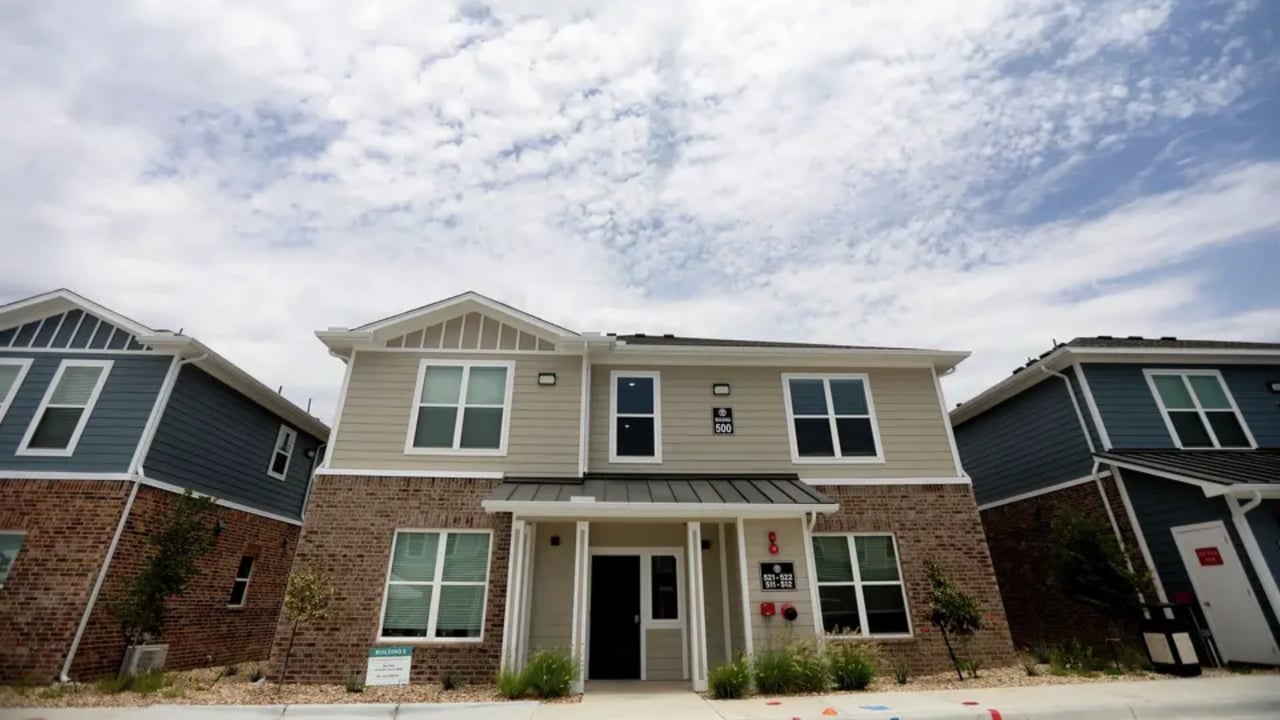
Builders often construct collections of single-family rentals organized into a community.
However, the requirement to sell the homes after seven years was dropped. The law still restricts the purchase of new single-family homes by large institutional investors that own at least 350 single-family homes, with exceptions for homes intended for the build-to-rent market.
Institutional investors that own at least 350 homes — or mega investors — accounted for about 2.4% of Dallas-Fort Worth home purchases in 2025, according to a Realtor.com report.
The U.S. hasn’t had a law like this for a while, Wilson said. The law aims to overhaul the system and look for ways to create efficiencies in the housing world.
Building affordability
With inflation and mortgage rates likely to stay above 6%, affordability is a challenge, Wilson said.
“It’s imperative that housing values remain kind of flat right now for us to try and claw back at this affordability challenge and I think this passage of this law helps with that,” Wilson said.
D-FW has an excess supply of housing on the new home side, meaning it’s a great time to buy a house, Wilson said. But many people can’t afford these houses. If incomes go up and while housing values don’t rise as quickly affordability starts to come back, he said.
D-FW’s housing market has a moderate shortage of homes for middle-income earners, according to an analysis from Realtor.com and the National Association of Realtors. The report estimated that there were about 11,500 affordable listings missing from the market and that for buyers earning $75,000, only 10.2% of listings were affordable in March 2026.
Workers Efron Ruiz, right, and Luis Rangel lay sod at a home that was under construction in southeast Dallas.
2024 File Photo/Tom Fox
National programs are already bringing down housing costs for some D-FW homes. The housing law renews and expands several existing programs like the HOME Investment Partnership Program.
Builders of Hope is Dallas County’s current Community Housing Development Organization partner for the HOME program.
“Typically we use all HOME funds to close the gap between the cost of the build to help low-margin families, make the homes become affordable,” said Builders of Hope CEO Chris Lewis.
Labor costs and material costs might increase, but nonprofit developer’s sale prices are capped. The organizations can’t pass that cost onto the homebuyer, Lewis said. That’s where the HOME program comes in.
In West Dallas, Builders of Hope is building a mixed-unit development called Trinity West Villas, funded by a combination of HOME funds and American Rescue Plan Act funds, Lewis said. Last year, Builders of Hope completed a project, building 19 homes that were also subsidized by HOME funds.
The law also supports state and local programs to repair existing homes by providing grants and forgivable loans to homeowners and landlords.
“A lot of times, we want people to stay in their homes,” Lewis said. “For example, we renovated 20 homes last year and I think that saved, in real estate value, about $3 million. Just helping families stay in their homes.”
For many, buying a new home may not be feasible. As of May, the median home price in D-FW is about $400,000, according to the MetroTex Association of Realtors. Lewis said there’s no way many families in areas they serve can afford that.
Red tape, yellow tape
Helping housing developers cut through red tape was also a big focus of the law, mainly by amending environmental requirements.
The law delegates certain environmental reviews to local and state governments and aligns review processes across federal agencies.
“I think the red tape has moved to yellow, if we want to use a traffic light analogy,” Lewis said. “I think it’s yellow, because you have environmentals, that helps with large projects. But again, at the end of the day, you still want to do your property diligence.”
If the permitting process in general can be expedited in Dallas, that would have an impact, Lewis said. Affordable housing has a lot of delays, like reimbursement challenges, which can add time and extra costs, he said.
Using federal incentives and best practices to alleviate housing supply roadblocks is going to help builders across D-FW and the state, said David Lehde, director of government affairs of the Dallas Builders Association. That includes the environmental review process and other ways of making things more efficient.
The law talks about bringing stakeholders to the table with ideas and developing a long-term strategy for what works and what doesn’t work in order to bring a house to market, he said.
Several parts of the act encourage local and tribal governments to innovate solutions to housing issues, like implementing pre-reviewed housing designs to expedite affordable housing construction.
Recently constructed houses were new additions to Coolidge Street in Dallas. New homes are being constructed to help meet the growing demand throughout the D-FW housing market.
2025 File Photo
Additionally, the law includes a $200 million innovation fund, an annual competitive grant program that awards local governments and tribes demonstrating increases in housing supply, incentivising strategies like zoning changes and streamlining permitting.
The new law’s goal is to increase the supply of affordable housing across the country, said Troy Broussard, CEO of Dallas Housing Authority, in a statement.
“This is achieved by giving local municipalities greater flexibility in crafting permitting and zoning ordinances and provides housing developers with more transparency regarding the timing of approval processes,” Broussard said. “These provisions would promote a more rapid development of affordable housing units in the market, which is greatly needed.”
Broussard said the DHA supports the legislation and looks forward to how the law will help foster an increase in the supply of affordable housing in North Texas.
Setting the path
The law attempts to address housing supply from different directions.
The law includes other efforts like a pilot program to help revitalize vacant commercial buildings into affordable housing, changes in regulations for manufactured and modular homes and a pilot program for small dollar mortgages.
Crews work on a home at a modular home factory in Grand Prairie.
2023 File Photo/Elias Valverde II
Bryan Tony, executive director of the housing advocacy organization Dallas Housing Coalition, said the organization will encourage regional partners to take advantage of these opportunities and follow the intent of the law.
“Hopefully when these opportunities become available, people from across North Texas, especially our local governments, will look to take advantage of them and leverage these new funding opportunities and guidebooks and frameworks that the federal government is putting out as quickly as they can,” Tony said.
The law’s impact may not be immediate, said Hannah Jones, a senior economic research analyst at Realtor.com.
“I would expect that it does take time, as permitting takes time and building takes time,” Jones said. “All of these things are kind of slow moving to some degree, but setting that path in the right direction is exciting as we think about the future of the housing market.”