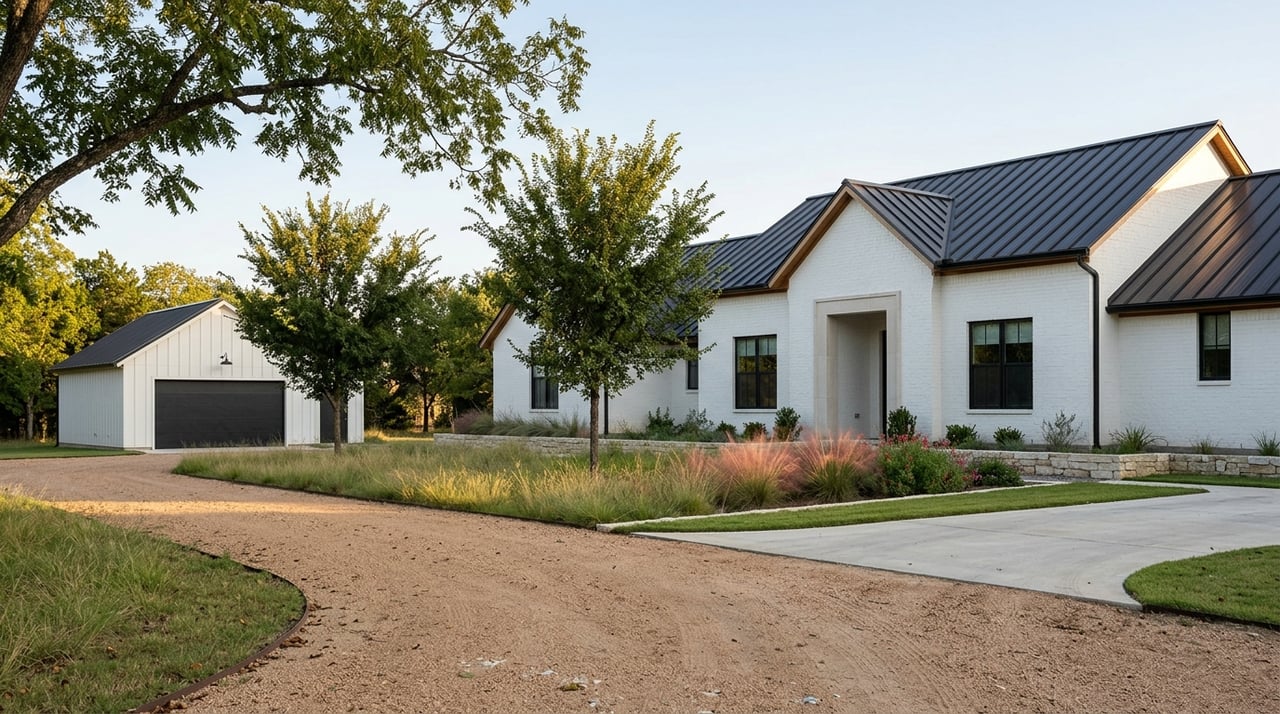
If you are dreaming about more space, more privacy, and room to spread out, buying a home on land in Argyle can feel like the best of both worlds. You get close access to the Dallas-Fort Worth metroplex while still finding properties that may offer acreage, open views, and a more semi-rural setting. The key is knowing that in Argyle, two homes that look similar online can come with very different rules, utilities, and ownership responsibilities. Let’s dive in.
Why Argyle stands out
Argyle is not a one-size-fits-all housing market. The town describes its housing as ranging from small lots to expansive custom homes on multiple acres, with rolling pastures, large estate lots, and new master-planned communities.
That mix matters when you are shopping for a home on land. Unlike a typical subdivision search, buying in Argyle often means looking beyond the house itself and paying close attention to the parcel, utility setup, and local jurisdiction.
What “home on land” means in Argyle
In Argyle, land-oriented homes can fall into different zoning categories, including agricultural, estate-residential, and other residential or overlay districts. The Town’s Planning & Zoning division handles zoning, platting, land use, and tree preservation, which means the exact tract location can shape what is allowed.
One useful benchmark is the SF-1 zoning district. It is intended for detached single-family development, is low density, and requires a minimum lot size of one acre.
That gives you a good sense of the type of setting many buyers picture when they think about Argyle acreage. The town also notes that lots are often 1 to 2 acres, while many tracts are 5 to 10 acres or larger and may support farming, ranching, and equestrian uses.
Why parcel details matter so much
When you buy a home in a standard neighborhood, many basic questions are already answered for you. In Argyle, those answers can change from one property to the next, even if the homes are only a short distance apart.
That is why land purchases here are often less about finishes and floor plans and more about the details tied to the lot. Before you move forward, you want to know who governs the property, how water and wastewater are handled, and whether your plans fit current zoning.
Check the property’s jurisdiction first
One of the first things to verify is whether the parcel is inside the Town of Argyle, inside the ETJ, or in unincorporated Denton County. That distinction can affect zoning, permits, utilities, and what approval process applies if you want to make changes later.
The Town of Argyle says you can confirm whether a parcel is in town limits or the ETJ by using the interactive map. Colored parcels are within town limits, while the red-hatched area is in the ETJ. Denton CAD can also help confirm taxing jurisdiction.
If you hope to change the use of a property, that is not always simple. The town states that rezoning requires public hearings and final Town Council approval.
Understand water and sewer before you buy
Utilities in Argyle are highly location-specific. The town lists Argyle Water Supply Corporation as the water provider and notes that the town itself does not provide water connections.
For wastewater, some homes are connected to public sewer. In those cases, the town maintains the public sewer main, while the property owner is responsible for the sewer service line from the tap to the structure.
This is one reason two acreage homes can function very differently. One may have public utility connections, while another may rely on private systems that require more owner oversight.
Septic systems need close review
If the home is not connected to municipal sewer, the on-site sewage facility, also called an OSSF, becomes a major part of your due diligence. In unincorporated Denton County, the Environmental Health Division administers the OSSF order.
Denton County states that an OSSF is wholly owned by the property owner and that wastewater must remain on the property. The county also says aerobic treatment systems require a continuous maintenance contract unless homeowner training has been approved.
The Texas Commission on Environmental Quality requires a site evaluation by a licensed site evaluator or professional engineer before an OSSF can be constructed, installed, altered, extended, or repaired. TCEQ also recommends pumping septic tanks every three to five years, though local permitting authorities may require stricter maintenance.
Private wells come with extra steps
Some buyers looking for more land also hope for a private well. If that is on your wish list, you need a different checklist than you would for a home on public water.
Texas Water Development Board guidance says private well owners in Texas do not need state registration unless the property is within a groundwater conservation district. In Denton County, the North Texas Groundwater Conservation District’s boundaries match the county, and its well-registration information says all new non-exempt wells require a production permit and all new wells must be approved and registered before construction begins.
That means well questions should come up early, not after closing. If a property already has a well or you may want one in the future, it is important to understand the district rules that apply.
Permits can be broader than expected
Many buyers assume permitting only matters if they plan a major build. In reality, permit requirements in this area can be much broader.
For homes in Argyle, the Town’s Planning & Zoning division is the starting point for zoning, platting, land use, and tree-preservation questions. The town also states that building permits exist to verify compliance with building codes and development standards.
In unincorporated Denton County, development permitting may apply to grading, excavation, drilling, and even storage of materials. The county also says new drives on county-maintained roads require a culvert permit, and septic permits may also be required.
If the tract has low-lying areas or drainage concerns, there may be another layer to review. Denton County notes that a floodplain development permit may be required before an OSSF permit is issued.
Country feel does not mean unrestricted use
A big reason buyers choose Argyle is the lifestyle. More privacy, more usable outdoor space, and the possibility of room for horses or limited agricultural use can be very appealing.
Still, a country atmosphere does not automatically mean you can use the land any way you want. Zoning and permit rules still apply, and they can shape what is realistic for the property.
For example, in the SF-1 district, private animal lots and stables may be allowed only by Specific Use Permit. The ordinance also requires at least 1.5 acres of grazing area for those uses.
That is why it is so important to match the property to your actual goals. If you want room for animals, a workshop, future expansion, or a different type of access, those details should be checked before you commit.
Smart questions to ask before making an offer
When you are comparing homes on land in Argyle, these questions can save you time and reduce surprises:
- Is the parcel inside town limits, the ETJ, or unincorporated Denton County?
- What zoning district applies to the property?
- Is water provided by a public supplier, or is there a private well?
- Is wastewater handled by public sewer or an OSSF?
- Are there any driveway, culvert, floodplain, or development permits that affect current or future use?
- If you want animals, additions, or land-use changes, does current zoning allow that without a Specific Use Permit or rezoning?
These answers often tell you whether a property is truly a fit. In Argyle, the house and the land need to work together.
A more confident way to buy in Argyle
Buying a home on land in Argyle can be a wonderful move if you want more space and a different pace of life. It can also require more careful research than buying in a standard subdivision, because utilities, septic, wells, zoning, and permits may vary by parcel.
The good news is that with the right guidance, you can sort through those details before they become costly surprises. A thoughtful, local approach helps you focus on properties that match both your lifestyle and the practical realities of ownership.
If you are exploring homes on land in Argyle or relocating to North Texas and want a clear, high-touch buying strategy, Minouche Martins can help you navigate the process with care and confidence.
FAQs
What makes buying a home on land in Argyle different from buying in a subdivision?
- In Argyle, parcel-level details matter much more because zoning, water, sewer, septic, wells, and permitting can vary from one property to the next.
How can you verify whether an Argyle property is in town limits or the ETJ?
- The Town of Argyle says you can use its interactive map to see whether a parcel is within town limits or the ETJ, and Denton CAD can help confirm taxing jurisdiction.
What should you know about septic systems when buying land in Argyle?
- If a property is not on municipal sewer, the OSSF is a major due-diligence item because the owner is responsible for the system, and certain systems may require ongoing maintenance contracts.
What should you know about private wells in Denton County?
- Private well rules can depend on groundwater district requirements, and in Denton County the North Texas Groundwater Conservation District says new non-exempt wells require approval, registration, and a production permit before construction begins.
Can you keep horses or animals on a home-on-land property in Argyle?
- Not always, because zoning controls land use, and in the SF-1 district private animal lots and stables may be allowed only by Specific Use Permit with minimum grazing-area requirements.
Why are permits so important when buying acreage in Argyle?
- Depending on the property location and your plans, permits may be needed for building, grading, excavation, septic work, drive access, culverts, or floodplain-related improvements.